Entry · Ref NA8GQX43
Which Flowering Houseplants Are Safe for Rabbits?
- Posted
- 2026-11-24
- Last amended
- 2026-11-24
- Account
- @gardennotes75
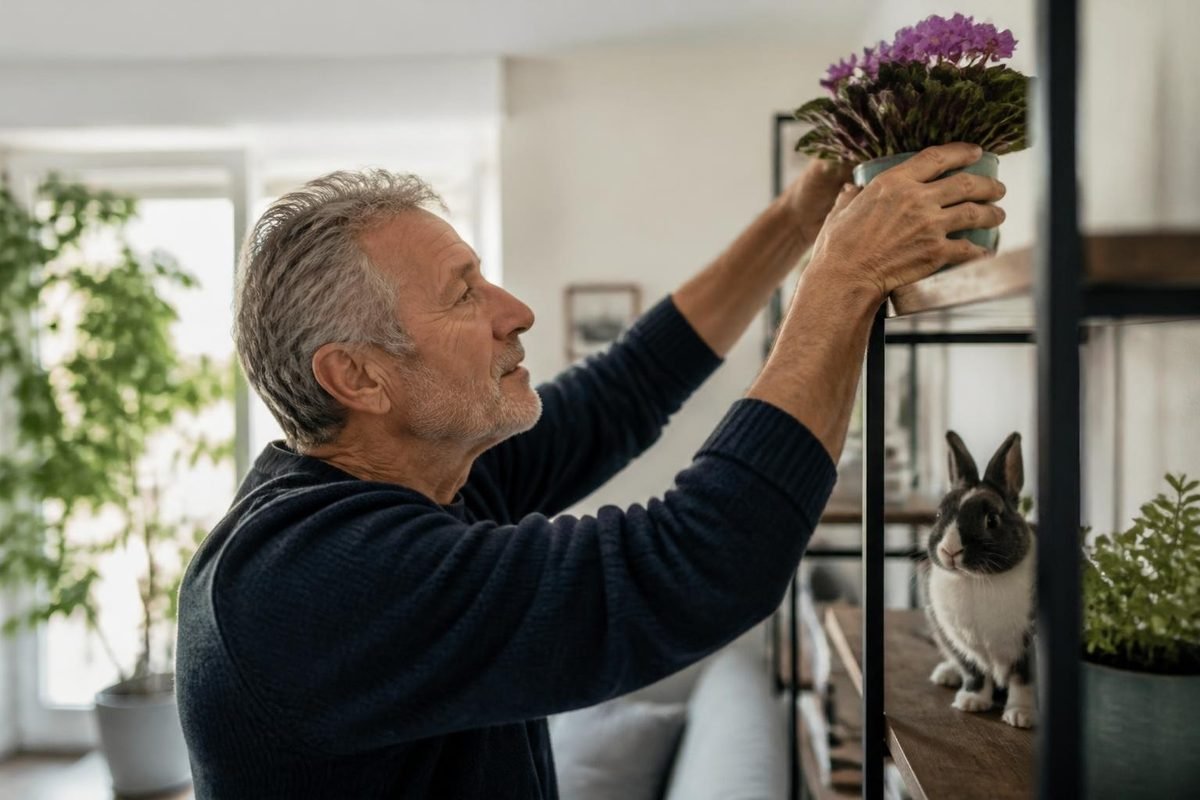
African violets, moth orchids, Christmas cacti, bromeliads and gerbera daisies are flowering houseplants generally considered non toxic to rabbits. Even so, it is sensible to keep pots out of reach: a plant that is not poisonous can still cause an upset stomach if your rabbit eats too much.
Five flowering plants to consider
These plants offer colour without the same concern as plants known to be toxic. Check the botanical name on the label before bringing one home, since common names can be shared by different plants.
- African violet (Saintpaulia species): A compact plant with soft leaves and small flowers, often in purple, pink or white.
- Moth orchid (Phalaenopsis species): Its long lasting flowers grow on arching stems. The leaves and flowers are considered non toxic.
- Christmas cactus (Schlumbergera species): This cactus has flat, jointed stems and flowers that can appear in several colours. It is not the same plant as a desert cactus with sharp spines.
- Bromeliad (Bromeliaceae family): Many bromeliads have a bright central flower spike surrounded by a rosette of leaves.
- Gerbera daisy (Gerbera jamesonii): Its large, colourful flowers look cheerful in a pot, though the plant needs plenty of light indoors.
Non toxic does not mean a plant is a suitable meal. Rabbits need a diet based mainly on hay, with appropriate leafy greens and a measured amount of pellets.
Keep the plant and the rabbit apart
Place plants on a stable shelf or in a room your rabbit cannot enter. A low table may not be much of an obstacle to a determined rabbit, and trailing leaves can make an invitation even easier to accept.
Pick up fallen petals and leaves, and check the area after watering or moving a pot. This also gives you a chance to spot a wobbly container before it lands on the floor.
Give your rabbit safe things to chew, such as suitable untreated rabbit toys and plenty of hay. A little distraction may save your orchid from an unplanned haircut.
Watch out for soil and treatments
The plant itself is only part of the picture. Fertilisers, pesticides and leaf shine products can make a pot risky, even if the plant is non toxic. Potting mixes may also contain fertiliser or other additives that a rabbit should not eat.
Keep bags of compost and plant care products securely stored. If you use a saucer beneath a pot, do not let your rabbit drink the collected water, which can contain traces of these products.
If your rabbit has eaten a plant
Remove the plant and save its label or take a clear photo to help identify it. Note what was eaten and approximately how much. Do not try to make your rabbit vomit.
Contact a rabbit knowledgeable vet for advice, especially if the plant or any treatment on it is unknown. Eating less, producing fewer droppings or seeming unusually quiet can signal a problem that needs prompt attention.
A carefully placed flowering plant can brighten a room shared with a rabbit. Give both a little space, and the flowers have a better chance of staying on the plant.
Related reading: https://kunstforum-piaristen.com/blumen-in-der-wiener-kunstgeschichte-vom-stillleben-zur/